
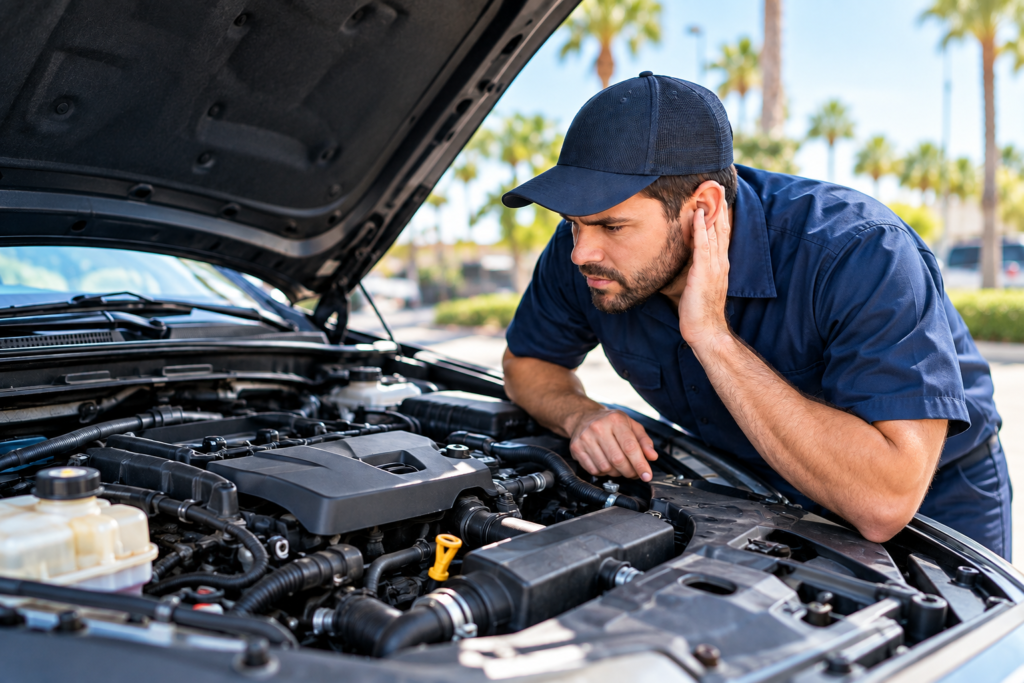
Keeping a car healthy does not take a mechanic’s knowledge. It takes a simple plan and the habit of sticking to it. For drivers in Lehi, that plan matters even more than usual. Daily commutes along I-15, cold winter mornings, hot summer afternoons, and the occasional trip up into the canyons all put different kinds of stress on a vehicle across the year.
This checklist breaks maintenance into what to look at regularly, what to service by mileage, and what to check each season. Use it as a starting point, and always compare it with the schedule in your owner’s manual, since the exact intervals vary from one vehicle to another.
Every Month: Quick Checks You Can Do Yourself
A few minutes once a month can catch problems before they grow. None of these checks require special tools.
- Check tire pressure with a gauge when the tires are cold, using the number on the sticker inside the driver’s door
- Look at the tread and sidewalls for uneven wear, cracks, or bulges
- Check the engine oil level with the dipstick on level ground
- Look at the coolant reservoir to make sure the level sits between the marks
- Top off windshield washer fluid
- Test headlights, brake lights, turn signals, and hazard lights
- Glance under the car for fresh drips or puddles
It also helps to pay attention to how the car feels and sounds. A new vibration, a warning light, or a change in braking should be treated as information, not an annoyance.
Every 5,000 to 7,500 Miles: Oil and Tires
Oil is the most important routine service. Fresh oil lubricates the engine, carries away heat, and keeps internal parts clean. Many modern vehicles using synthetic oil can go longer between changes, but heavy stop and go traffic, short trips, and towing all call for shorter intervals. Follow what your manual says for your driving conditions.
This is also the time to rotate your tires. Rotation evens out wear between the front and rear, which extends tire life and keeps handling predictable. Ask for a quick inspection of the brakes, belts, and fluids at the same visit, since the car is already up on a lift or being looked over.
Every 15,000 to 30,000 Miles: Filters and Inspections
Filters protect your engine and your lungs. The engine air filter keeps dust out of the intake, and a clogged one reduces power and fuel economy. The cabin air filter cleans the air that comes through your vents, and it needs more frequent replacement if you drive on dusty roads or during heavy pollen seasons.
At this stage you should also have your brakes measured for pad thickness, your battery tested, and your suspension components inspected. Drivers who spend a lot of time on the freeway should pay close attention to the signs that show up after long commutes, and we cover those in our article on commuting along I-15 and the signs your car needs a checkup.
Every 30,000 to 60,000 Miles: Fluids and Major Service Items
Longer interval services are easy to forget, and that is exactly why they cause so many surprises. Put these on your calendar when you reach the right mileage.
- Transmission fluid service, which keeps shifting smooth and protects an expensive component
- Coolant flush, since old coolant loses its protective additives
- Brake fluid replacement, because it absorbs moisture and loses effectiveness over time
- Spark plugs, which affect starting, power, and fuel economy
- Serpentine belt and hoses, which should be inspected and replaced before they crack
- Power steering fluid, if your vehicle uses a hydraulic system
Some of these intervals can stretch much further on newer vehicles, so your manual is the final word. The key is to never let them pass without at least an inspection.
Before Winter: Cold Weather Preparation
Utah winters bring freezing mornings, snow, and icy roads. Before the cold arrives, have the battery tested, since cold weather exposes a weak battery quickly. Check the coolant mixture to be sure it protects against freezing. Inspect the tires for tread depth and consider winter tires if you drive in the canyons regularly. Replace worn wiper blades and keep the washer fluid full of a winter blend.
It also helps to keep a small emergency kit in the car with a blanket, a flashlight, jumper cables, and an ice scraper. If your car ever refuses to start on a frosty morning, our guide to the top 10 reasons your car won’t start and how to get back on the road walks through the most common causes.
Before Summer: Heat Preparation
Hot weather is hard on batteries, tires, and cooling systems. Test the battery again, check the AC to make sure it cools properly, and inspect the radiator hoses and coolant level. Check tire pressure more often, since heat raises pressure and underinflated tires run hotter. Make sure the cooling fans work and the engine temperature stays steady in traffic.
Warning Signs That Should Not Wait
Even with a good schedule, some symptoms need attention right away. Do not put off a visit if you notice any of the following:
- A check engine light that stays on or flashes
- Squealing, grinding, or a soft feeling in the brakes
- The temperature gauge climbing toward hot
- Slow cranking or clicking when you start the car
- A burning smell, smoke, or visible fluid leaks
- Shaking, pulling, or unusual vibrations while driving
Keep a Simple Service Record
Write down the date, mileage, and work done after each service, whether in a notebook, a phone note, or a folder of receipts. A clear record helps you stay on schedule, helps a technician diagnose problems faster, and increases your car’s resale value because buyers trust a documented history.
Why a Mobile Mechanic Makes the Checklist Easier
The biggest reason maintenance gets skipped is time. Between work, family, and everything else, finding hours to sit in a waiting room is hard. A mobile mechanic comes to your home or workplace, so oil changes, brake checks, battery tests, fluid services, and inspections happen while you go about your day. When service is that convenient, staying on schedule stops feeling like a chore.
Put the Checklist to Work
A good maintenance routine is built from small, repeatable steps: quick monthly checks, regular oil and tire service, filters and inspections at moderate mileage, bigger fluid services over the long run, and seasonal preparation twice a year.
To learn more about our services, visit our homepage. When you are ready to get your car on a steady schedule, reach out through our contact us page and we will come to you anywhere in the Lehi area.
A little attention on a regular basis keeps your car reliable, and it keeps repair bills small.