
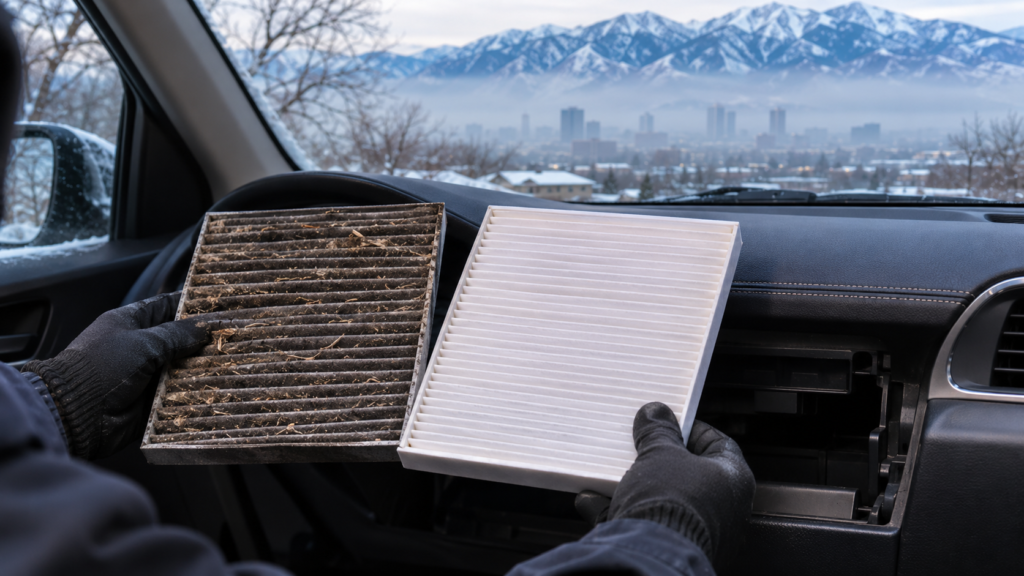
If you live in Lehi or anywhere along the Wasatch Front, you know the feeling. A high pressure system settles over the valley, cold air gets trapped near the ground and a gray haze hangs over the mountains for days. Winter inversion season is part of life in Utah, and it affects more than the view. The air you breathe inside your car comes from the air outside, and your cabin air filter is the only thing standing between that air and your lungs while you drive. This guide explains how winter inversions affect the air inside your vehicle, what a cabin air filter does, the signs it needs to be changed, how to choose a replacement and how to keep your car’s air as clean as possible. If you have been searching for cabin air filter help in Lehi or tips on car air quality in Utah, this is a good place to start.
What Is a Winter Inversion?
Normally, air near the ground is warmer than the air above it, so it rises and mixes, carrying pollution away. During an inversion, that pattern flips. A layer of warm air settles above cold air near the surface and acts like a lid. Pollution from vehicles, wood smoke, heating and other sources gets trapped in the valley instead of dispersing. Because the mountains surround much of northern Utah, inversions can last for days or even longer, and the air quality can become poor. Local air quality alerts and forecasts are the best source of information on current conditions in your area.
How the Air Gets Into Your Car
Your car’s heating, ventilation and air conditioning system draws air from outside, usually through an intake near the base of the windshield, and sends it through the vents. In many vehicles, that air passes through a cabin air filter first. This filter is typically made of pleated paper or a similar material, and some include an activated carbon layer. It is designed to catch dust, pollen, soot and other particles before they reach the cabin. Not every vehicle has a cabin air filter, but most newer ones do. Your owner’s manual will tell you whether your car has one and where it is located.
When the outside air is thick with fine particles during an inversion, the filter works harder than usual. It can fill up faster, and a clogged filter does not do its job as well.
What a Cabin Air Filter Does
- Traps particles. It catches dust, pollen, soot, debris and other airborne particles.
- Supports airflow. A clean filter lets air move freely through the system.
- May help reduce odors. Filters with an activated carbon layer are designed to help with some odors and fumes.
- Protects the system. Keeping debris out of the blower and evaporator helps the climate system last.
A cabin filter is not a cure all. It cannot remove every pollutant, and how well it works depends on the type of filter and its condition. But a clean, correctly installed filter is a simple way to improve what you breathe on your commute.
Why Inversion Season Is Hard on Your Filter
During an inversion, the outside air carries more fine particles than usual. Add dusty roads, cold dry weather and long stretches of slow traffic on busy corridors, and the filter collects a lot of material quickly. Salt and grit from winter roads can also find their way into the intake. A filter that was fine in summer may be nearly full by the middle of winter. That is why many drivers choose to check or replace it before inversion season starts, and again afterward.
Signs Your Cabin Air Filter Needs to Be Changed
Watch for these clues:
- Weak airflow from the vents. If the fan is running but little air comes out, even on high, a clogged filter is a common cause.
- Musty or stale smells. A dirty filter can hold moisture and odors, which then blow into the cabin.
- Foggy windows that are slow to clear. Poor airflow can make the defroster less effective.
- More dust inside the car. If you notice dust on the dashboard soon after cleaning, the filter may not be catching it.
- A noisy blower. A struggling fan or whistling sound can mean the airflow is restricted.
- More allergy or irritation symptoms in the car, such as sneezing or itchy eyes. These can have many causes, but a dirty filter is worth checking.
- A visibly dirty filter. If you can see it, a dark, clogged filter with leaves or debris is overdue.
How Often Should You Change It?
There is no single answer. Manufacturers list different intervals, and driving conditions change the picture. Your owner’s manual gives the recommended schedule for your vehicle, and many manuals suggest checking or replacing the filter more often if you drive in dusty or polluted conditions. A reasonable approach for Utah drivers is to:
- Follow the interval in your owner’s manual as a baseline.
- Inspect the filter before inversion season begins.
- Check it again mid winter if the air has been bad for long stretches or airflow seems weak.
- Check it once more in spring, when pollen season starts.
It is also a good idea to ask for a filter check whenever your car is serviced. Our car maintenance checklist for Lehi drivers can help you fit it into your regular routine.
Choosing the Right Replacement Filter
Filters are not all the same, and the right one depends on your car and your needs. Common types include:
- Standard particle filters. These trap dust, pollen and other particles.
- Activated carbon filters. These add a layer designed to help reduce odors and some gases, which many drivers find helpful during inversions.
- Premium or high efficiency filters. Some are designed to capture smaller particles, though they must still fit your vehicle and its airflow requirements.
Fit matters. A filter that does not seal properly can let unfiltered air go around it. Check your owner’s manual for the correct size and type, and be careful with products that claim extraordinary results. A technician can recommend a filter that suits your vehicle and your driving.
Replacing a Cabin Air Filter
On many vehicles, replacing the filter is a quick job, often done through the glove box or under the hood near the base of the windshield. On others, it requires removing panels or trim. If you decide to do it yourself, follow your owner’s manual for the location and the correct procedure, and pay attention to the airflow direction arrow printed on the filter. Installing it backwards can reduce its effectiveness. If the housing is hard to reach, or you are not comfortable working in tight spaces, a technician can handle it.
Other Ways to Improve Air Quality in Your Car
- Use the recirculation setting during heavy pollution. This setting recirculates the air already in the cabin instead of pulling in outside air. It can help during bad air days, but avoid using it for long stretches, since windows can fog and the air can get stale. Your owner’s manual explains how your system works.
- Switch back to fresh air now and then. This helps keep the cabin from getting stuffy.
- Keep the interior clean. Vacuum floor mats and seats, and wipe down surfaces to reduce dust.
- Avoid idling in enclosed spaces. Exhaust fumes are harmful, and you should never run the engine in a closed garage.
- Do not ignore odd smells. A sweet smell, a burning smell or an exhaust smell inside the car can point to a mechanical problem, and some of these need attention right away.
- Have the AC system checked. Moisture buildup in the system can lead to musty odors, and a technician can look at the evaporator, drain and related parts.
- Pay attention to local air quality alerts. On very bad air days, limit unnecessary driving if you can.
Why Your Commute Matters
Many Lehi drivers spend a lot of time on the road, especially on busy corridors such as Interstate 15. Long, slow commutes during an inversion mean more time breathing whatever your car pulls in, and more wear on the filter and the climate system. If you drive that route daily, regular checkups help catch small issues before they become bigger ones. Our post on commuting along Interstate 15 and the signs your car needs a checkup explains what to watch for.
How a Mobile Mechanic Can Help
Changing a cabin air filter is a small job that is easy to put off. A mobile mechanic can come to your home or workplace, inspect the filter, replace it if needed and check related items such as airflow, the blower and the climate system, all in one visit. Many filter replacements can be done in your driveway in a short time. If your car needs a repair that requires specialized equipment, the technician will tell you honestly whether a shop visit is needed.
Quick Inversion Season Checklist
- Check your owner’s manual for the filter location and schedule.
- Inspect or replace the filter before inversion season starts.
- Consider a carbon filter if odors are a concern.
- Watch for weak airflow, musty smells and foggy windows.
- Use recirculation during heavy pollution, and switch back to fresh air now and then.
- Check the filter again in spring.
- Keep the interior clean and the AC system in good shape.
A clean cabin air filter is a small part that makes a noticeable difference, especially when the valley air turns thick. If you would like help checking or replacing yours, visit our homepage to learn more, or contact us to schedule a visit.